

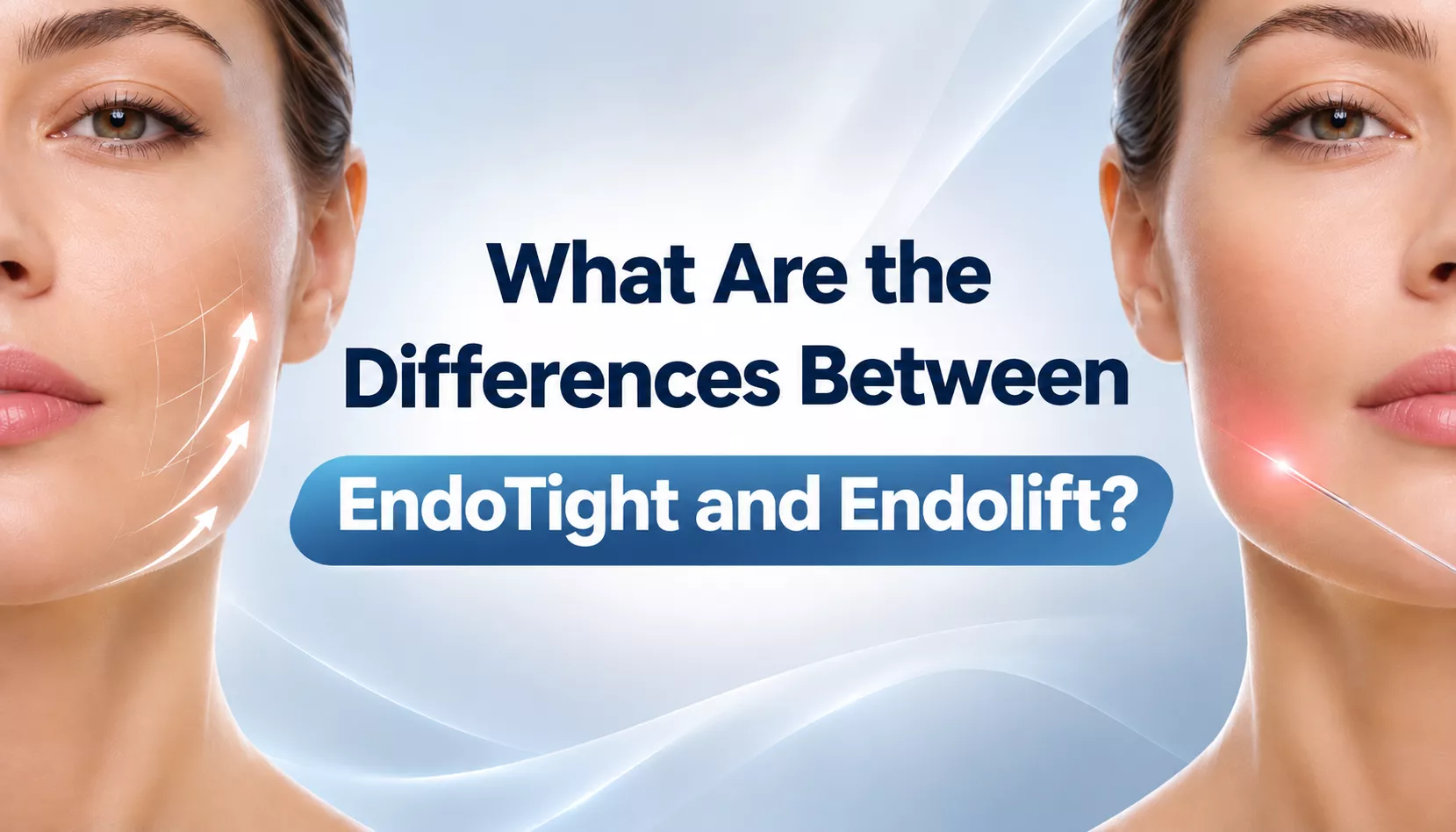
The gradual loss of definition in facial contours, mild fullness beneath the chin, and loosening of the neck skin are common changes that occur over time. People exploring non-surgical options for these concerns often come across EndoTight and Endolift. Both procedures use laser energy beneath the skin, but they are based on different technologies.
The differences between EndoTight and Endolift mainly involve the laser wavelength, its interaction with tissue, and the treatment protocol. When choosing between these procedures, skin laxity, fat distribution, and the desired improvement are considered together.
What Is EndoTight?
EndoTight is a minimally invasive skin tightening procedure that delivers laser energy beneath the skin through a thin optical fiber. The controlled thermal effect aims to contract existing collagen fibers and stimulate new collagen production over time. The procedure may help reduce skin laxity along the facial contours, improve jawline definition, and reshape small areas of localized fat.
In particular, Fotona EndoTight uses a 1064 nm Nd:YAG laser. Unlike conventional laser treatments performed on the skin surface, this procedure delivers energy directly to targeted tissues beneath the skin through an optical fiber. Therefore, the location of the entry points and the way energy is delivered are important aspects of the procedure.
What Is Endolift?
Endolift is a laser-assisted procedure performed by inserting thin optical fibers into the deeper layers of the skin. The commonly used Endolift system operates with a 1470 nm diode laser. The procedure aims to support collagen remodeling through controlled heat and target limited amounts of fat tissue in suitable areas.
Endolift is most commonly considered for mild to moderate skin laxity around the lower face, double chin, and neck. However, the expected improvement is closely related to the amount of fat in the treated area and the skin’s ability to tighten. In cases of significant excess skin, laser treatment cannot replace a surgical facelift.
What Are the Main Differences Between EndoTight and Endolift?
The two procedures may appear similar at first glance. Both involve the use of thin optical fibers and laser energy delivered beneath the skin. However, the main differences lie in the laser source, wavelength, and the distribution of heat within the tissue.
| Comparison | EndoTight | Endolift |
|---|---|---|
| Laser Type | Nd:YAG in the Fotona system | Diode laser |
| Wavelength | 1064 nm | Commonly 1470 nm |
| Application Method | Optical fiber inserted beneath the skin | Microfiber inserted beneath the skin |
| Primary Goal | Skin tightening and contour improvement | Skin tightening and contour improvement |
| Tissue Effect | Thermal effect depending on device settings | Thermal effect with different absorption characteristics |
| Is It a Surgical Procedure? | No, minimally invasive | No, minimally invasive |
The technical differences shown in the table do not mean that one procedure is better for everyone. Results also depend on the amount of energy delivered, treatment depth, and anatomical characteristics of the area.
Why Is Laser Wavelength Important?
The wavelength of a laser affects how light is absorbed by water and other structures within the tissue. The 1470 nm wavelength used in Endolift is more strongly absorbed by water than many other laser wavelengths. The 1064 nm Nd:YAG laser used in EndoTight interacts with tissue differently. This means that the same energy level may not produce an identical thermal effect with both devices.
However, a higher wavelength does not automatically mean stronger skin tightening. The depth at which the fiber is inserted, the speed of application, total energy delivered, and tissue thickness also play important roles. For a safe procedure, the targeted tissue must be heated in a controlled manner while protecting the surrounding sensitive structures.
How Does the Skin Tightening Effect Work?
The common feature of both procedures is the controlled thermal effect created beneath the skin. As the tissue heats up, the structure of collagen fibers may change. The subsequent repair process can contribute to a firmer and tighter skin appearance over the following months. This mechanism is different from a surgical procedure that physically lifts facial tissues.
Laser treatment is not performed solely to reduce wrinkles. When mild laxity is present in the lower face, improving jawline definition may be one of the treatment goals. If concerns such as pigmentation, enlarged pores, or fine lines on the skin surface are more prominent, treatments such as Fotona 4D face rejuvenation, which targets different skin layers, may also be considered.
Which Areas Can Be Treated with EndoTight and Endolift?
EndoTight and Endolift are most commonly used on the lower face, jawline, double chin, and neck. The goal in these areas is to reduce mild sagging and create more defined facial contours. In some treatment plans, the lower cheeks and areas with small localized fat deposits may also be included.
Treatment of body areas requires a separate assessment. The degree of skin laxity around the arms, abdomen, or knees may differ significantly from that of the face. The same device cannot be expected to produce identical results in every area. It is particularly important to recognize the limitations of laser skin tightening when significant excess skin is present.
Who Is Suitable for EndoTight and Endolift?
These procedures are generally considered for adults with mild to moderate skin laxity who are looking for a more limited improvement rather than a major surgical change. Suitability is not determined by age alone. Skin quality, fat distribution, and medical history are also taken into account.
- People with reduced jawline definition: Contour improvement may be targeted when mild laxity is present in the lower face.
- People with limited fullness beneath the chin: Fat distribution and skin laxity are assessed together.
- People with mild neck skin laxity: Skin thickness and sensitive anatomical structures in the area are important considerations.
- People seeking non-surgical options: These procedures may be considered when the expected improvement is limited and realistic treatment goals have been established.
Is the Treatment Process the Same for Both Procedures?
The basic treatment process is similar. First, the treatment area is identified and the skin is cleaned. Local anesthesia may be administered when appropriate to numb the area. A thin optical fiber is then inserted beneath the skin through a small entry point. Laser energy is delivered in a controlled manner along predetermined treatment lines.
However, the device components, fiber characteristics, and energy settings may differ. The duration of the procedure depends on the size of the treatment area and the overall treatment plan. Simply hearing the name EndoTight or Endolift does not mean that every clinic follows the same protocol. The device and treatment method should be clearly identified before the procedure.
Which Is Less Painful, EndoTight or Endolift?
Both procedures involve inserting an optical fiber beneath the skin, which may cause sensations of pressure, pulling, or warmth. Local anesthesia helps reduce these sensations. Mild tenderness may occur for several days after treatment. The level of discomfort depends on the size of the treated area and the individual’s pain tolerance.
It would not be accurate to claim that EndoTight or Endolift is definitely more comfortable based on wavelength alone. The energy level, application technique, and tissue response after treatment also affect comfort. If pain increases significantly or unexpected symptoms develop, medical evaluation is necessary.
What Is the Recovery Process Like After EndoTight and Endolift?
Mild swelling, bruising, redness, and tenderness may occur after either procedure. These symptoms generally decrease over time. However, because heat is generated beneath the skin, the internal healing process may continue longer than the visible signs of recovery.
| Recovery Stage | What to Generally Expect |
|---|---|
| First Few Days | Mild swelling, tenderness, or bruising may occur. |
| Return to Daily Activities | Depends on symptoms and the treatment area. |
| Skin Tightening | May become more noticeable over the following weeks and months. |
| Follow-Up Process | The treatment area and tissue response are monitored. |
| Additional Care | Sun protection and recommended aftercare are important. |
When Do EndoTight and Endolift Results Become Visible?
Some people may notice mild tightening during the first few weeks. However, swelling in the early recovery period can make it difficult to evaluate the appearance accurately. Since collagen remodeling takes time, more noticeable improvements may develop over several weeks or months.
When comparing EndoTight and Endolift, looking only at photographs taken immediately after treatment is not enough. Photographs taken under the same lighting conditions, angles, and facial expressions are important for an accurate comparison. Changes in facial contours and improvements in skin surface quality should also be evaluated separately.
Are EndoTight and Endolift Results Permanent?
The tissue response created by laser energy may continue for a certain period. However, the results do not remain unchanged throughout life because natural aging, sun exposure, weight fluctuations, and changes in skin structure continue. There is no single duration that accurately describes how long the results will last for everyone.
These procedures do not eliminate every sign of facial aging. If significant excess skin is present or a stronger lifting effect is desired, the benefits and limitations of other procedures, including thread lift treatment, may also be evaluated.
What Should You Pay Attention to After EndoTight and Endolift?
Post-treatment care is important for supporting skin recovery and identifying possible complications at an early stage. During the first few days, unnecessary pressure on the treated area should be avoided, and the recommended aftercare instructions should be followed.
- Protect the treated area: Avoid rubbing the skin or applying firm massage to the treatment area.
- Avoid excessive heat: Follow the recommended waiting period before returning to saunas, very hot showers, and intense exercise.
- Monitor your skin: Seek medical evaluation if increasing redness, severe pain, discharge, or fever develops.
- Attend follow-up appointments: Swelling, changes in sensation, and facial contour appearance should be assessed during follow-up examinations.
Which Is Better, EndoTight or Endolift?
There is no single answer that applies to everyone. Both procedures are used to target skin tightening in cases of mild to moderate laxity. The difference lies not only in the technical characteristics of the devices but also in how well the treatment plan addresses the patient’s needs. Neither procedure should be expected to produce results comparable to a surgical facelift in cases of significant sagging.
Furthermore, strong clinical evidence directly comparing these two procedures remains limited. Therefore, it would not be appropriate to promise faster, longer-lasting, or safer results based solely on the name of the device. When learning more about EndoTight treatment, it is more useful to focus on which concerns the planned procedure is intended to address.
Frequently Asked Questions
Are EndoTight and Endolift the Same Procedure?
No. Both procedures use laser energy beneath the skin, but Fotona EndoTight uses a 1064 nm Nd:YAG laser, while Endolift commonly uses a 1470 nm diode laser. Because of these technical differences, they should not be considered the same procedure.
Can EndoTight and Endolift Completely Eliminate a Double Chin?
These procedures may help improve the appearance of mild skin laxity and limited fat accumulation beneath the chin. However, laser treatment alone may not be sufficient in cases of significant fat deposits or excess skin. Complete elimination of a double chin cannot be guaranteed.
How Many Sessions of EndoTight or Endolift Are Needed?
The treatment schedule is determined according to skin condition, the size of the treatment area, and the response to the procedure. A single session may be considered for some individuals, while additional treatments may be necessary in other cases. It is not always possible to determine the exact number of sessions before treatment.