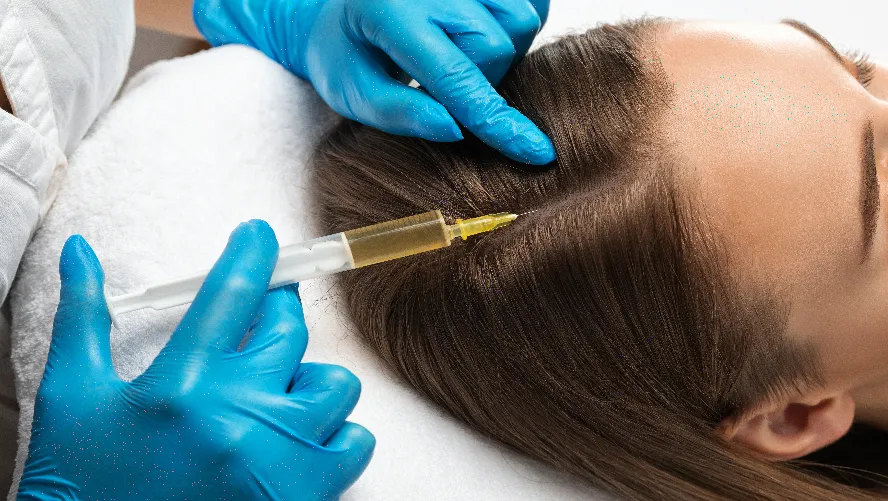
What Is PRP?
PRP is a natural treatment method in which plasma derived from a person’s own blood is injected back into the body.
Platelet-rich plasma is used in areas such as skin rejuvenation, hair loss and tissue repair. Blood taken from the patient is processed to separate its components, and only the platelet-rich portion is injected into the target area. This increases collagen production, helping the skin become firmer and more youthful. It also accelerates wound healing and strengthens hair follicles. Since it is non-surgical and carries no allergy risk, PRP is widely preferred in aesthetic and medical treatments.
What Is PRP Used For?
PRP is used for skin rejuvenation, preventing hair loss and promoting tissue regeneration.
Common applications include reducing wrinkles, treating pigmentation and improving acne scars. It also prevents hair loss, nourishes follicles and supports new hair growth. In sports medicine, PRP speeds the healing of tendons and ligaments. It is also used as a supportive treatment for joint pain in areas like the knee and shoulder. Its natural composition and compatibility with the body ensure a very low risk of side effects.
How Does PRP Help With Hair Loss?
PRP revitalizes hair follicles, reduces shedding and stimulates new hair growth.
Injected into the scalp, PRP increases blood circulation and enhances follicle function. This reduces hair loss while improving thickness and quality. With regular treatments, hair becomes fuller, shinier and stronger. It is effective for male pattern hair loss as well as thinning in women. Since it uses the patient’s own blood, PRP is safe and carries no allergy risk. Being non-surgical and natural makes it a popular option for hair restoration.
How Is PRP Used for Skin Rejuvenation?
PRP increases collagen production in the skin, resulting in a tighter, brighter and younger appearance.
Blood taken from the patient is processed, and the platelet-rich portion is injected beneath the skin. This stimulates cell renewal and accelerates the skin’s natural repair process. It is especially effective for fine lines, pigmentation and loss of elasticity. PRP is used on the face, neck, décolleté and hands—areas that show visible signs of aging. It improves hydration, radiance and smoothness. Because it is natural, allergy risk is minimal.
How Is PRP Applied?
PRP is applied by drawing blood from the patient, processing it and injecting it into the target area.
A small amount of blood is taken and centrifuged to separate platelet-rich plasma. The plasma is then injected with micro-needles into the skin or scalp. Depending on the area, the procedure takes about 30–45 minutes. PRP is used in skin rejuvenation, hair loss treatment and wound healing. Mild redness may appear afterward but fades quickly. With consistent sessions, results become long-lasting.
Who Can Have PRP?
PRP is suitable for individuals in good general health who are seeking natural solutions for skin or hair problems.
Most people can safely undergo PRP, except pregnant or breastfeeding women and individuals with blood disorders. It is ideal for those experiencing signs of aging, pigmentation, loss of elasticity or hair thinning. Because the treatment uses the person’s own blood, allergy risk is extremely low. PRP is effective for both men and women and is well tolerated by adults of various age groups.
How Many Sessions Are Needed?
PRP treatment generally includes 3 to 6 sessions and may be repeated at intervals.
Session count depends on individual needs, skin structure or the level of hair loss. The first three sessions are usually spaced 2–4 weeks apart. Later, maintenance sessions may be done every 6 months or yearly. Plans are personalized depending on whether the goal is skin rejuvenation, strengthening hair follicles or reducing scars. Regular sessions maximize PRP’s natural regenerative effects.
When Do PRP Results Appear?
PRP results typically begin to appear within 2 to 4 weeks.
Skin rejuvenation effects or hair loss improvements gradually become noticeable. Skin appears brighter, firmer and more refreshed, while hair shedding decreases and strands strengthen. The best results are usually seen after the third session. Although the timeline varies from person to person, results become long-lasting with regular treatments. Because PRP is a natural method, its benefits develop gradually but steadily.
Are There Any Side Effects?
PRP is generally safe and carries minimal side-effect risk.
Mild redness, swelling or bruising may occur at the injection sites, but these effects are temporary. Since the treatment uses the patient’s own blood, allergy risk is very low. Slight skin sensitivity may appear after the procedure but resolves within a few hours. Infection risk is minimal when performed by trained professionals. Being non-surgical and biologically compatible makes PRP a widely preferred method.
What Should Be Considered After PRP?
For the first 24 hours after PRP, the skin should be kept clean, makeup should be avoided and sun exposure minimized.
Sensitivity, redness or mild swelling may occur but usually subsides quickly. The skin should not be washed on the first day, and sauna, steam rooms or intense exercise should be avoided. Sunscreen is essential for protection. Avoiding alcohol and smoking supports faster healing.
PRP Prices 2026
PRP prices in 2026 vary depending on the treatment area, number of sessions and individual skin or hair needs. Whether used for hair loss, facial rejuvenation or scar treatment, session duration and treatment frequency differ. Therefore, giving an exact price is not possible. After an examination, the most suitable treatment plan is determined. The goal of PRP is to achieve a healthier, fuller and more refreshed appearance.
For detailed information and a personalized price assessment, contact us.
Does PRP Promote Hair Growth?
Yes, PRP stimulates hair follicles, promotes new hair growth and reduces hair loss.
By increasing blood circulation and accelerating cell renewal, PRP strengthens thinning strands and may trigger regrowth in shedding areas. It is especially effective when applied in early stages of hair loss. However, in areas where follicles are completely inactive, results may be limited. With consistent treatments, PRP improves hair thickness, shine and strength. Personalized treatment planning ensures maximum benefit.
Is PRP Painful?
PRP is usually well tolerated and causes only mild discomfort.
A topical anesthetic cream is applied beforehand to minimize pain. Micro-needle injections are performed gently and superficially beneath the skin. The procedure is short, typically 30–45 minutes. Discomfort varies depending on individual pain threshold. Mild redness and sensitivity afterward are normal. Since PRP is non-surgical, recovery is quick and daily activities can resume immediately.
Are PRP Results Permanent?
PRP can provide long-lasting and near-permanent results when performed regularly.
However, maintenance sessions are recommended to preserve its effects. For hair loss, repeating PRP once or twice a year after the initial sessions helps maintain results. For skin rejuvenation, periodic maintenance sessions are also beneficial. Since PRP stimulates natural cellular regeneration, its effects build gradually over time. Longevity depends on lifestyle, genetics and treatment area. Healthy habits further extend the results.
What Are the Benefits of PRP for the Skin?
PRP increases collagen production in the skin, promoting renewal, firmness and a more youthful appearance.
Injected beneath the skin, platelet-rich plasma accelerates cell turnover and tissue repair. It helps reduce fine lines, improves skin tone and increases elasticity. PRP also lightens acne scars and pigmentation. It is safely used on the face, neck, décolleté and hands. With regular sessions, skin brightness and moisture balance improve. As a natural and body-compatible method, PRP carries very little risk of side effects.