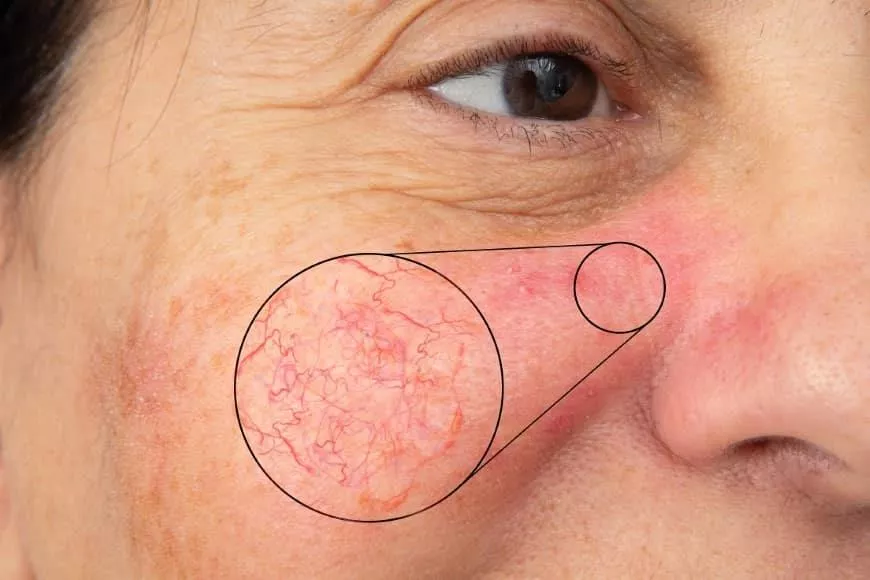
What Is Laser Facial Vein Treatment?
Laser facial vein treatment is a method that targets visible facial capillaries using light energy to eliminate them.
This treatment focuses on red, purple or blue vessels that appear around the nose, cheeks and forehead. The laser heats the hemoglobin inside the vessel, causing it to collapse and fade over time. It affects only the vessel without harming the skin surface. The procedure is short and usually comfortable. It does not disrupt daily life and does not leave marks. With advanced laser systems, it can be safely used on all skin types.
Why Do Facial Capillaries Appear?
Facial capillaries can develop due to genetic factors, sun damage, aging and environmental triggers.
Sensitive skin, sudden temperature changes, alcohol consumption, chronic skin conditions such as rosacea or eczema and hormonal fluctuations can also make these vessels more visible. As the skin becomes thinner, vessels lie closer to the surface and appear as redness. This is more common in fair-skinned individuals. If left untreated, the appearance may spread and become persistent.
How Does Laser Treatment Eliminate Vessels?
Laser treatment destroys unwanted vessels by targeting hemoglobin with controlled light energy.
The light heats the vessel wall, damages its structure and causes the vessel to close. The vessel is then absorbed by the body beneath the skin over time. Since the laser targets only the vessel, nearby tissues remain unharmed. Sessions are brief and healing is usually fast. After a few treatments, vessel visibility is greatly reduced or completely gone. It offers an effective and long-lasting cosmetic solution.
When Is It Recommended?
Laser facial vein treatment is recommended for broken capillaries, redness and superficial vascular visibility.
It is especially effective for vessel dilation around the nose, cheeks and forehead. Vessels caused by genetics, sun damage, skin sensitivity or rosacea respond well to treatment. It is ideal for individuals who experience cosmetic concern due to persistent redness. By reducing visible veins, laser therapy evens out skin tone and creates a brighter appearance.
How Does the Treatment Process Work?
The treatment begins with an expert evaluation and continues with personalized sessions.
In the first session, skin type and vessel structure are assessed. The laser with the appropriate wavelength is used to target the vessels. Sessions typically last 10–20 minutes and may cause mild discomfort. Temporary redness after the procedure is normal and often fades within a few hours. A break of 4–6 weeks is given between sessions to support healing. Most cases require 1–3 sessions, depending on vessel structure. Sun protection is essential throughout the process.
How Many Sessions Are Needed?
Most people need 1 to 3 sessions for facial vein treatment.
The number of sessions depends on the color, intensity and depth of the vessels. Thin and superficial vessels may disappear in one session, while thicker or widespread vessels may require extra sessions. A 4–6 week interval between sessions is advised. Each session reduces vessel visibility. An expert will create a personalized plan after evaluation. Following aftercare guidelines supports longer-lasting results.
How Long Is the Recovery Period?
Recovery after laser facial vein treatment usually takes between 3 and 7 days.
Mild redness, swelling or sensitivity may appear but these effects fade quickly. Redness often decreases within 24 hours and the skin returns to normal in a few days. In rare cases, temporary bruising may occur. Most people return to daily activities the next day. Using sun protection and gentle skincare speeds up recovery and supports results.
What Are the Advantages of Laser Vein Treatment?
Laser vein treatment is a quick, effective, non-surgical method that leaves no marks.
It targets vessels precisely without damaging the skin. Results are long-lasting and the healing period is short. It does not require anesthesia and is usually comfortable. It helps reduce redness, visible vessels and uneven skin tone. Advanced laser technologies allow safe use even in sensitive areas. Daily life can be resumed immediately after treatment. It removes bothersome vascular appearance with minimal sessions.
Are There Any Side Effects?
Side effects of laser vein treatment are usually mild and temporary.
Mild redness, warmth or slight swelling may occur after the procedure. Rarely, bruising or light crusting may appear. These effects fade within a few days. Temporary color changes may also occur depending on skin sensitivity. Without proper aftercare, there is a small risk of irritation or infection, but this is uncommon. When performed by trained specialists, the risk of side effects is very low.
What Should Be Considered After the Treatment?
After laser treatment, the skin must be protected from the sun and regularly moisturized.
For the first days, avoid makeup, hot water and harsh skincare products. Use sunscreen daily and cleanse the skin gently. Cool compresses may help reduce redness. If crusting or dryness occurs, avoid scratching. Alcohol, smoking and intense exercise can slow healing. Follow the recommended skincare routine to support results and prevent complications.
Laser Facial Vein Treatment Prices 2026
Laser facial vein treatment prices in 2026 vary according to the device used, the extent of visible vessels and the number of required sessions. The procedure is usually planned over several sessions and the duration may change depending on the vessel structure. Thin capillaries may improve in one session, while more prominent vessels may need additional treatments. Therefore, giving an exact price is not possible. Since the treatment is personalized, the cost can only be determined after a facial assessment. The goal is to achieve calmer and more even skin.
For detailed information and a personalized price evaluation, contact us.
Do Facial Capillaries Disappear Completely With Laser?
Yes, thin facial capillaries can disappear largely or completely with laser treatment.
The laser targets hemoglobin and destroys the vessel in a controlled way. Superficial and thin vessels usually disappear in 1–2 sessions. Thicker, deeper or recurring vessels may require extra sessions. Skin type, vessel color and density affect the outcome. Sun protection after treatment supports long-lasting results. Lifestyle adjustments help prevent recurrence.
Is Laser Vein Treatment Painful?
Laser vein treatment is usually painless or causes only minimal discomfort, felt as a mild stinging sensation.
Most people describe a light warmth or pinprick feeling during the procedure. This may be stronger in sensitive areas, so anesthetic cream may be used. The treatment is short and mild redness or sensitivity may appear afterward. These effects usually fade within hours. Modern laser systems provide a comfortable experience and allow quick return to daily activities.
Does Redness Occur After Laser Treatment?
Yes, mild redness can occur after laser vein treatment and it is temporary.
Redness often fades within a few hours to 1–2 days. The duration varies depending on skin type and the treated area. Slight warmth or swelling may also appear, especially on sensitive regions like the face. Cool compresses help reduce redness. Avoiding direct sun exposure supports healing and prevents irritation.
Are the Results Permanent?
The vessels treated with laser are permanently removed.
The body absorbs the treated vessel and it does not return. However, new vessels may appear over time due to genetic factors, skin structure or lifestyle. This means results are long-lasting but new sessions may be needed later. Proper skincare and sun protection help maintain the results. An annual check-up session may be recommended when needed.
Is Laser Vein Treatment Suitable for Everyone?
Laser vein treatment is suitable for many people, but there are exceptions.
It should be postponed during pregnancy, breastfeeding, active infection, open wounds or use of photosensitizing medications. Individuals with darker skin tones may have a higher risk of pigmentation changes, so careful evaluation is required. Ideal candidates are those with visible superficial vessels and overall good skin health. A dermatology evaluation is essential to create a safe, personalized treatment plan.