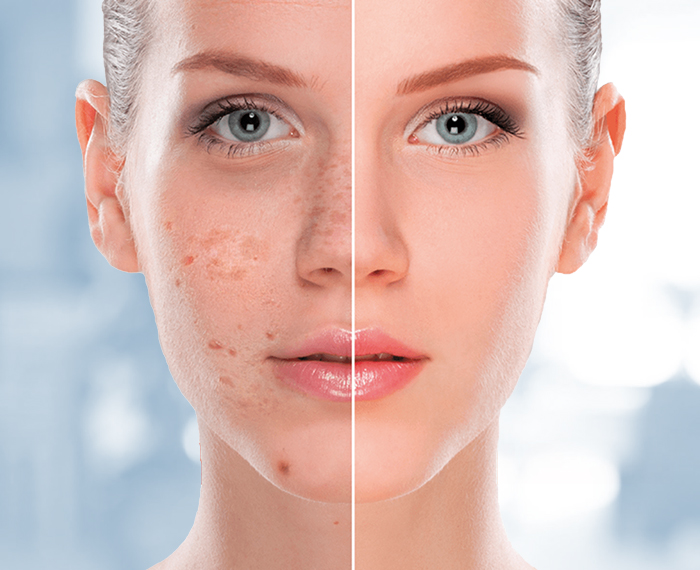
What Is Spot Treatment?
Spot treatment refers to medical procedures performed to reduce skin discoloration and even out the skin tone.
These treatments are typically used for sunspots, melasma, acne marks and age spots. Methods such as laser treatments, chemical peels, mesotherapy and medical skincare are commonly applied. The treatment type is chosen based on the nature of the pigment, skin structure and the depth of the discoloration.
With spot treatment, the skin is renewed and gains a brighter, more radiant appearance. When sessions are done regularly, effective results can be achieved. Sun protection and following dermatological recommendations are essential throughout the treatment process.
Why Do Skin Spots Occur?
Skin spots are usually caused by sun exposure, hormonal changes and skin trauma.
Sunlight increases melanin production, leading to pigmentation problems. Pregnancy, birth control pills and hormonal imbalances can trigger conditions like melasma. Acne, scars, chemical burns or harsh cosmetic procedures may also cause discoloration.
Skin type, genetic factors and aging are additional contributors. Early intervention and routine skincare can prevent spots from becoming permanent. Using sunscreen is the most effective way to protect the skin from pigmentation.
Which Types of Skin Spots Can Be Treated?
Sunspots, melasma, acne marks, age spots and birthmarks can all be treated.
These types of discoloration can be reduced through various skin renewal and brightening methods. Fractional laser, chemical peels, mesotherapy and medical skincare are among the most common treatment options. Stubborn conditions like melasma often require more sessions and a more delicate approach.
A personalized plan is created based on the type of spot and skin response. Treatments performed under dermatological supervision provide visible improvement and more even-toned skin.
How Is Laser Spot Treatment Performed?
Laser spot treatment targets pigment beneath the skin by delivering controlled light energy.
The laser light reduces excess melanin and evens out the skin tone. It is especially effective for sunspots, age spots and acne-related pigmentation. Before the procedure, a skin analysis is performed and the device settings are adjusted according to skin type and the type of discoloration.
The application is generally painless, with a mild warming sensation. Sessions last 15–30 minutes, and mild redness may occur afterward. Since the skin becomes sensitive after treatment, sunscreen is essential. Typically, 3–6 sessions are required.
Chemical Peeling for Spot Treatment
Chemical peeling is an effective method that exfoliates the upper layer of the skin, reducing spots and evening the skin tone.
During this procedure, solutions containing acids such as AHA, BHA or TCA are applied to the skin. These solutions remove dead skin and reveal a fresh, clearer layer beneath. Superficial peels are suitable for mild discoloration, while medium or deep peels are used for more stubborn pigmentation.
Redness, peeling and temporary sensitivity may occur after treatment but improve within a few days. Sun protection is crucial for best results. Sessions are typically performed every 4–6 weeks.
Are Brightening Creams and Serums Effective?
Yes, brightening creams and serums can be effective for mild or superficial pigmentation.
Ingredients such as vitamin C, niacinamide, kojic acid and arbutin help reduce melanin production. With consistent use, they lighten discoloration, balance skin tone and enhance radiance.
However, deeper and stubborn spots may not respond enough to topical products alone and may require medical treatments. Products recommended by a dermatologist provide safer and more effective results. Their benefits increase when used with sunscreen and proper skincare.
Which Skin Types Are Suitable?
Spot treatment can be planned for all skin types when supervised by an expert.
Dry, oily, combination and sensitive skin can all benefit when the correct method and products are selected. Skin type determines treatment intensity, duration and choice of active ingredients. For example, gentler methods and lower laser intensities are preferred for sensitive skin.
In darker skin tones, the risk of hyperpigmentation must be considered. A dermatologist evaluation is essential to create a personalized protocol. Regardless of skin type, sunscreen is a mandatory part of treatment.
How Many Sessions Are Needed?
Spot treatment typically produces results within 3 to 6 sessions, depending on the discoloration.
The type, depth and age of the spot influence the number of sessions. Mild sunspots may improve in a few sessions, while melasma often requires longer treatment.
Sessions are usually spaced 2–4 weeks apart. Consistency increases treatment success. A detailed skin analysis is performed beforehand to create a personalized plan. After the treatment is completed, skincare products and sun protection help maintain results.
How Long Does It Take to See Results?
Results usually become noticeable after 2–3 sessions, but full improvement may take several months.
In the early weeks, the skin appears brighter and more even-toned, with visible reduction in discoloration. Patients should remain consistent and patient throughout the treatment.
Deep pigmentation such as melasma may take longer, while superficial spots lighten more quickly. Skin type and treatment method directly influence progress. Under dermatological supervision, significant improvement is often achieved within 2–4 months.
What Should Be Considered After Treatment?
After spot treatment, the skin must be protected from the sun, cleansed gently and kept well moisturized.
The skin becomes more sensitive and vulnerable to UV exposure. Broad-spectrum sunscreen must be used, and direct sunlight should be avoided as much as possible. Avoid makeup, exfoliants and harsh chemicals for the first 24 hours.
Hot showers, saunas and steam baths should also be avoided for a few days. Moisturizers and healing creams recommended by the dermatologist should be used regularly. The skin must not be scratched or peeled during recovery. These precautions enhance treatment success and prevent scarring.
Spot Treatment Prices 2026
Spot treatment prices in 2026 vary depending on the type of discoloration, skin structure and treatment method used. Techniques such as laser, chemical peels and microneedling require different session counts and planning. Therefore, an exact price cannot be given. The correct treatment plan is determined after examination. The goal is to achieve a more even-toned and radiant complexion.
For detailed information and a personalized price assessment, contact us.
Does Spot Treatment Peel the Skin?
Yes, some spot treatments—especially chemical peels and laser procedures—cause controlled exfoliation.
This controlled peeling removes damaged skin cells and promotes new, healthier skin. Mild crusting, redness and sensitivity are normal and usually subside within a few days. However, not all treatments cause peeling; serum-based treatments may not have this effect.
During the peeling phase, the skin should be treated gently, without scratching or picking. Following dermatological instructions ensures safe healing.
Do Sunspots Improve With Laser Treatment?
Yes, laser treatment is highly effective in reducing sunspots and evening the skin tone.
Laser energy targets melanin, breaking down dark spots and gradually lightening them. Technologies such as Q-Switched, fractional laser and IPL are commonly used for these issues. With the right device for the skin type, 3–5 sessions are usually sufficient.
Since the skin becomes sensitive after treatment, sun protection is crucial. Regular sunscreen use prevents recurrence and enhances treatment results. Under dermatological supervision, long-lasting and effective outcomes can be achieved.
Do Spots Return After Treatment?
Yes, if the skin is not protected after treatment, spots may reappear.
Treatment removes existing pigmentation but does not completely prevent new spots from forming. Prolonged sun exposure, unsuitable skincare products or hormonal changes can cause discoloration again.
Therefore, daily sunscreen use is essential. Regular skincare, preventive creams and dermatologist follow-ups help minimize recurrence. Care habits should be adjusted according to skin type and lifestyle.
Which Is More Effective: Laser or Chemical Peel?
Laser treatments generally provide more effective results than chemical peels, depending on the type of discoloration and skin structure.
Laser technology reaches deeper layers of the skin and targets pigment cells directly, making it more effective for stubborn and deep spots. Chemical peels work better for superficial discoloration and tone irregularities.
Peels may be safer for very sensitive skin, while laser must be applied carefully in darker skin tones. The best choice is determined after a dermatologist evaluation. In some cases, both methods can be combined.
Can Spot Treatment Be Done in Summer?
Yes, spot treatment can be performed in summer, but strict sun protection is required.
Because the skin becomes more sensitive after treatment, sun exposure increases the risk of darkening. High-SPF sunscreen must be used consistently, and direct sunlight should be avoided after each session.
Light procedures or mild chemical peels can be performed safely in summer. Laser treatments may still be done for individuals working indoors or with no planned sun exposure. Following dermatologist guidance ensures safe and effective treatment timing.